Meta’s latest announcement represents another significant step toward making AI glasses an everyday consumer product announcing on 23 June 2026 a new set of smart glasses called Meta Glasses with new designs and a starting price of $299.
Developed in partnership with EssilorLuxottica, the new Meta Glasses build upon the success of the Ray-Ban Meta platform while introducing new frame designs, expanded personalization and the latest generation of Meta AI.
AI Is Becoming Wearable
The race to build the world’s best AI assistant is no longer limited to smartphones.
Technology companies increasingly believe that glasses are the ideal form factor because they allow AI to understand the world from the same perspective as the wearer. Instead of pulling out a phone, users can simply ask questions, receive answers, capture memories or navigate their surroundings while keeping both hands free.
This shift represents one of the biggest changes in personal computing since smartphones first appeared.
A Greater Focus on Style
One challenge facing smart glasses has always been convincing consumers to actually wear them.
Meta has addressed this by introducing multiple frame styles rather than producing a single technology-focused design.
The launch includes:
- Meta Adventurer – a classic rectangular frame
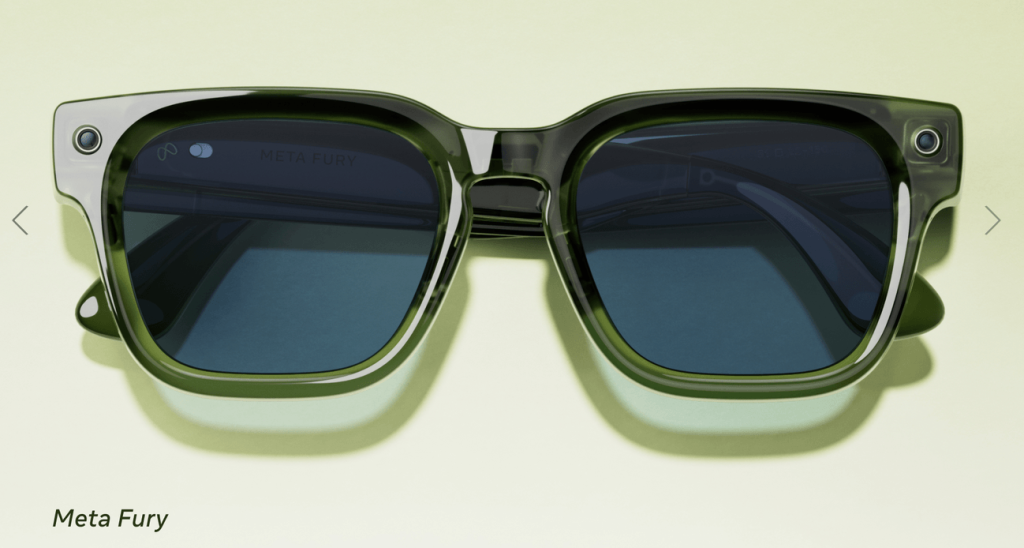
- Meta Fury – a bold statement frame
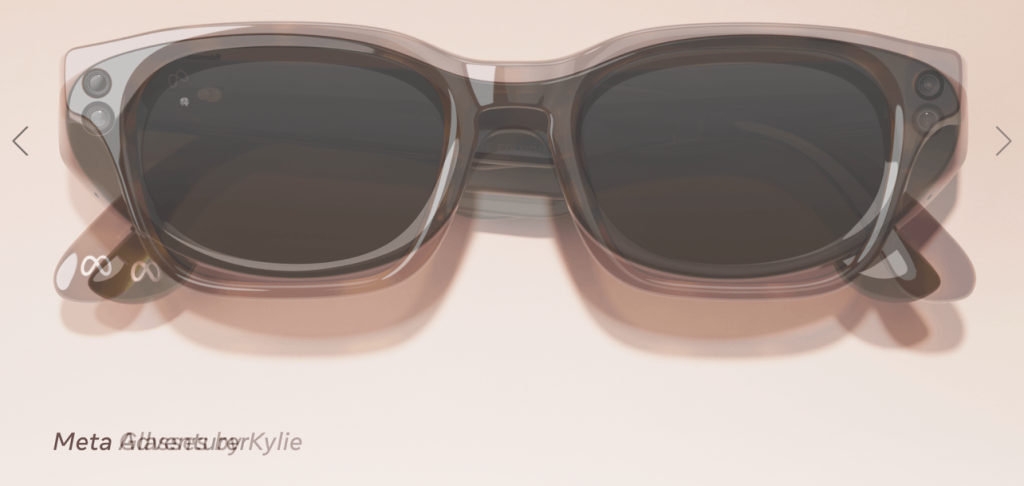
- Meta Glasses by Kylie – a slim oval design created with Kylie Jenner
With 26 different combinations of colours, lenses and frames available at launch, consumers can choose glasses that better match their personal style while still accessing the latest AI features.
Prescription lenses are also supported, making the glasses suitable for everyday wear.
Meta AI Gets Smarter
Perhaps the most important upgrade is not the hardware but the intelligence behind it.
The glasses launch with Meta AI powered by the company’s new Muse Spark model, bringing stronger multimodal capabilities from day one.
This enables the glasses to:
- Understand what you’re looking at
- Answer natural language questions
- Provide contextual recommendations
- Assist with navigation
- Help organise calendars and schedules
- Support healthier daily habits
- Deliver more conversational interactions
Rather than simply responding to commands, the AI is becoming increasingly aware of context and the user’s environment.
Built for Everyday Use
The latest Meta Glasses continue to offer many of the practical features users have come to expect, including:
- Hands-free photo and video capture
- Open-ear speakers for music, calls and podcasts
- Advanced microphones with wind-noise reduction
- More than eight hours of battery life
- Charging case providing up to 40 additional hours
- Privacy controls for both users and those around them
These features aim to make the glasses useful throughout an entire day rather than only during specific activities.
New Features Continue to Arrive
One advantage of AI-powered hardware is that it continues to improve after purchase.
Meta has announced several upcoming capabilities, including:
- Dynamic Photo, which automatically captures multiple images and recommends the best shot
- Turn-by-turn pedestrian navigation
- Live translation in 14 additional languages, including Japanese, Mandarin, Hindi and Korean
As AI models evolve, users can expect the glasses to gain new functionality through software updates rather than requiring new hardware.
What This Means for the AI Glasses Market
Meta’s latest release highlights how quickly the wearable AI market is maturing.
Consumers are no longer choosing between traditional eyewear and smart technology. Instead, manufacturers are designing products that combine fashion, prescription compatibility and increasingly capable AI assistants.
At DisplayGlasses.ai, we expect competition across the sector to accelerate as companies including Google, Apple, Amazon, Samsung and numerous specialist manufacturers continue investing in intelligent eyewear. Display-equipped smart glasses, AI assistants and augmented reality technologies are steadily converging into a new generation of wearable computing.
The next few years are likely to determine which companies define the future of AI eyewear, but one thing is becoming increasingly clear: AI glasses are moving beyond early adopters and becoming mainstream consumer technology.