Apple is quietly preparing its most important product category since the Apple Watch. Code-named N50, the company’s upcoming smart glasses represent a decisive shift toward AI-native hardware — lightweight, socially acceptable, and built to make Siri an ambient presence in everyday life.
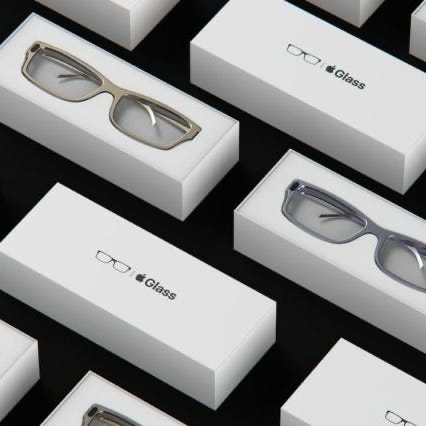
After the mixed consumer reception of Apple Vision Pro, Apple appears to have recalibrated its strategy. Rather than asking users to strap on a high-end spatial computer, the company is betting on something subtler: intelligent eyewear that integrates seamlessly into daily routines. The goal is not immersion. The goal is presence.
The N50 glasses are expected to feature a dual-camera architecture. One lens is designed for high-resolution photography and video capture, while the second focuses on computer vision — continuously interpreting the environment in real time. That distinction matters. Apple isn’t simply building wearable cameras; it’s constructing a perception layer that enables contextual intelligence. The glasses see what you see, understand where you are, and provide relevant assistance without constant prompting.
Processing will likely rely heavily on the iPhone, allowing the glasses themselves to remain lightweight and discreet. This tethered approach mirrors early Apple Watch models and reflects Apple’s ecosystem strategy: deepen hardware integration while avoiding battery and thermal compromises in small devices. The iPhone does the heavy lifting. The glasses deliver the experience.
At the center of it all is Siri. Apple’s voice assistant is reportedly undergoing a significant rebuild powered by advanced large language models developed in collaboration with Google. For years, Siri lagged behind newer AI systems in conversational depth. With N50, Siri becomes less of a command-based interface and more of an ambient intelligence — listening, observing, and assisting proactively.
Imagine walking into a university lecture hall and having your glasses quietly identify slides, transcribe notes, and summarize key concepts in real time. Imagine entering a meeting and receiving contextual prompts about previous conversations. Imagine travel navigation that overlays subtle directions in your peripheral vision without requiring you to glance at your phone. These use cases illustrate Apple’s broader ambition: to transform AI from something you open into something that surrounds you.
Apple’s competitive positioning is deliberate. Ray-Ban Meta smart glasses have already demonstrated consumer appetite for smart eyewear, while OpenAI is reportedly building AI hardware alongside former Apple design chief Jony Ive. The AI hardware race is real, and Apple is moving aggressively to ensure it defines the next interface layer rather than reacting to it.
Unlike Meta’s partnership with EssilorLuxottica, Apple is said to be designing its frames entirely in-house. That decision reflects a core belief: aesthetics will determine adoption. Smart glasses must look indistinguishable from premium eyewear. They must feel balanced, light, and elegant. If they look like technology experiments, they will fail socially. Apple’s mastery of industrial design is not a bonus feature here — it is the strategy.
The broader ecosystem implications are equally significant. Alongside the N50 glasses, Apple is reportedly accelerating development of a shirt-clipping AI pendant and camera-equipped AirPods. Each device contributes to a distributed sensing network. The glasses see. The AirPods hear. The pendant listens. The iPhone processes. Siri orchestrates. Together, they form a personal AI mesh that follows the user throughout the day.
This shift marks a transition from device-centric computing to context-centric computing. The smartphone era required intentional interaction — unlock, tap, scroll. Ambient AI reduces friction. Assistance becomes anticipatory rather than reactive. The technology fades into the background while intelligence moves to the foreground.
Privacy will be central to the N50’s success. Public skepticism toward always-on cameras remains high. Apple’s brand equity around privacy may be its strongest differentiator. Clear recording indicators, on-device processing, and granular user controls will not be optional features — they will be prerequisites for adoption. Apple understands that social trust is as critical as technological innovation.
The rumored timeline suggests internal prototypes are already circulating within hardware engineering teams, with production targeted as early as December and a potential public release in 2027. If that schedule holds, Apple will enter the market at a moment when AI expectations are fully mainstream but hardware form factors are still unsettled. That timing could prove decisive.
The iPhone made the internet portable. The Apple Watch made notifications wearable. The N50 glasses aim to make intelligence ambient. If successful, they will redefine how users interact with information — not through screens, but through perception.
AI will not disappear into the cloud. It will become embodied.
And when that happens, the most important interface won’t be in your pocket.
It will be right in front of your eyes.