AI Display Glasses Product Summaries
Meta Ray-Ban Display
Meta’s Ray-Ban Display glasses mark the company’s first model with an integrated display. They look like classic Ray-Bans but add a HUD for live captions, translations, and messages, plus microphones and a camera for recording and video calling. Paired with Meta’s Neural Band wrist controller (optional), they’re priced at $799 and launch in the US on September 30. They’re designed for creators and everyday social use, combining AI features with hands-free capture.

Xreal Air 2
The Xreal Air 2 are lightweight OLED display glasses (~72 g) with a sharp 1080p image per eye, up to 120 Hz refresh, and a ~46° field of view. They rely on USB-C with DisplayPort Alt Mode to connect to phones, laptops, or handheld consoles, and require prescription inserts for vision correction. Built-in open-ear speakers and microphones make them suitable for media and casual use. At around $399, they’re a popular choice for watching movies and working privately on the go.
VITURE Pro
VITURE Pro glasses feature 1080p “UltraClarity” displays with up to 120 Hz refresh and adjustable myopia dials down to -6.0D. Harman-tuned speakers give them a more immersive sound than many competitors. They connect over USB-C, with optional iPhone adapters, and typically retail for around $549. They’re particularly popular with gamers and travelers who want bright, smooth visuals in a compact package.
VITURE Luma
The new VITURE Luma introduces higher-resolution “1200p” micro-OLED panels with a ~50° field of view. They also include myopia adjustments to -6.0D and connect via USB-C, with add-on ecosystem accessories available. At $399 and shipping from September, the Luma aims to offer improved image quality at an affordable entry price.
Rokid Max
Rokid Max glasses offer 1080p micro-OLED displays per eye, a wide 50° field of view, and refresh rates up to 120 Hz. They weigh about 75 g and include built-in diopter adjustments from 0 to -6.0D, so many users won’t need prescription inserts. Dual microphones and open-ear speakers provide clear audio. Typically priced between $399–$529, the Max is pitched as a “personal cinema” for movies and gaming.
Lenovo Glasses T1
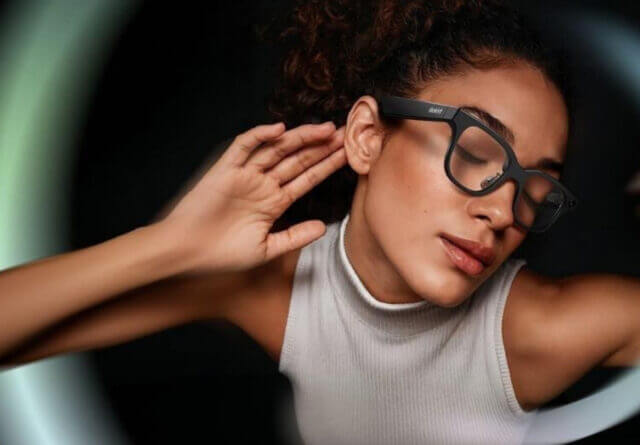
Lenovo’s T1 glasses use 1080p micro-OLED displays running at 60 Hz. They include built-in speakers and prescription inserts, connecting via USB-C or optional HDMI-to-Lightning adapters. Priced between $330–$499 depending on region, they are marketed as a productivity tool — effectively a private second screen for work or study.
TCL Nxtwear S+
The TCL Nxtwear S+ (from RayNeo) delivers a 215-inch-equivalent OLED virtual display with up to 120 Hz refresh and ~49° field of view. They connect via USB-C and sell for around $349–$449. They are a budget-friendly option for gaming or video viewing, although they lack extras like prescription adjustment or cameras.
RayNeo Air 2
RayNeo’s Air 2 glasses are one of the cheapest ways to get a large virtual screen, projecting a 201-inch view through micro-OLED panels. They connect via USB-C DisplayPort and cost about $199 when in stock, though availability is inconsistent. They’re aimed at users who want a simple, affordable way to watch content on the move.
Brilliant Labs Frame
Frame glasses by Brilliant Labs combine a lightweight (~40 g) AR heads-up display with a multimodal AI assistant. They include a camera and microphones, work with prescription partners, and connect standalone or with a phone. At $349, they’re intended as “always-on AI helper” glasses that display quick info, captions, or translations rather than acting as a full screen.
Brilliant Labs Halo
Halo glasses are Brilliant Labs’ latest model, offering a color micro-OLED HUD, bone-conduction audio, built-in diopter adjustment, and an integrated AI assistant (“Noa”). At about $299 and shipping from November, they weigh only ~40 g and emphasize all-day wear for lightweight AI interactions and glanceable information.